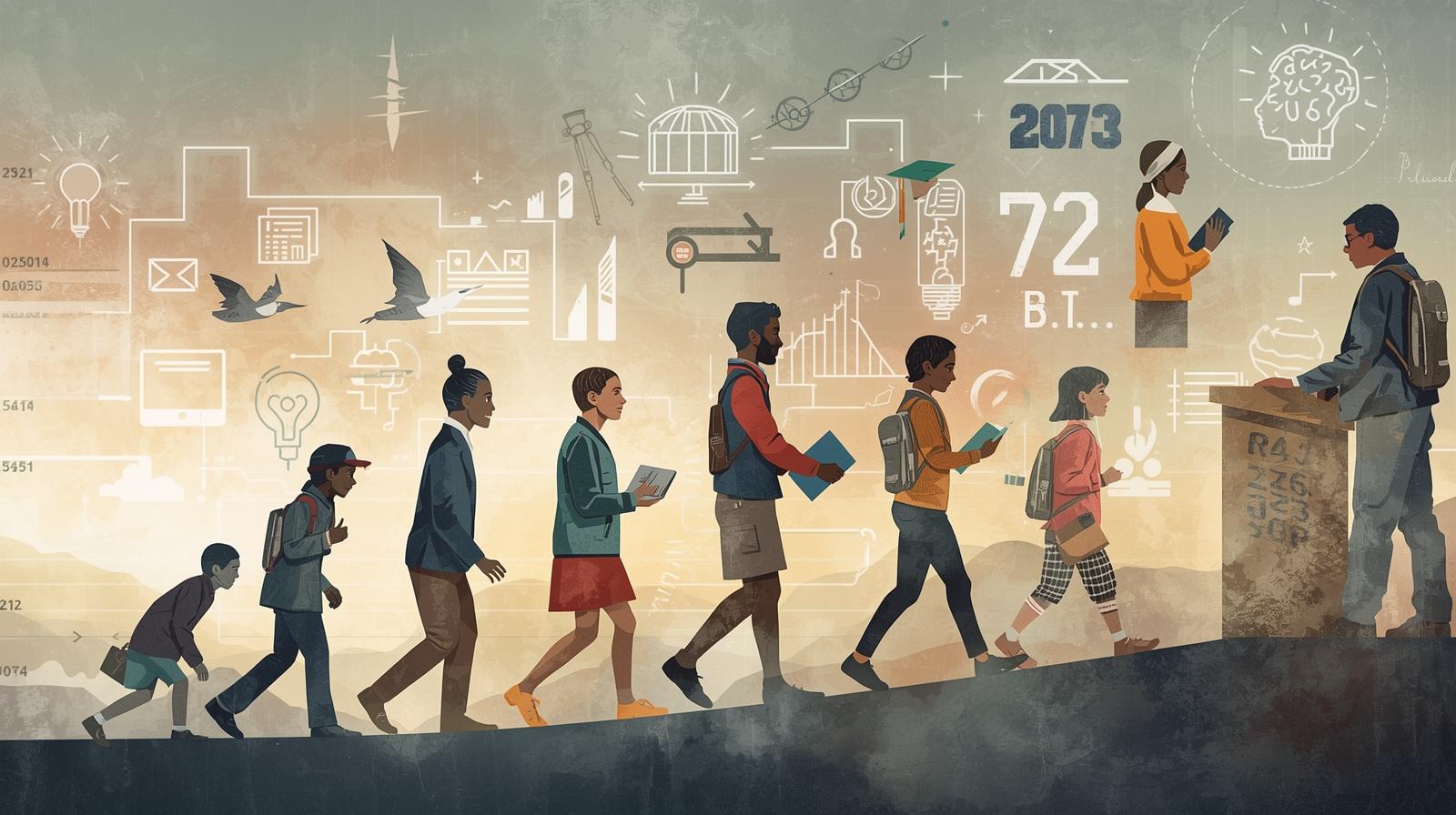
The Ever-Changing Nature of Education
Education has never been a static concept. What was considered advanced learning a century ago is now often seen as basic knowledge. Each generation faces unique social, economic, and technological challenges that require new approaches to learning. Reinventing education is not about discarding tradition but about adapting it to suit the demands of a rapidly evolving world.
The Influence of Technology and Innovation
One of the most powerful forces reshaping education is technology. The digital revolution has transformed classrooms into virtual learning environments, where knowledge is no longer confined to textbooks. Students today need to develop skills in digital literacy, critical thinking, and adaptability. If education systems remain stuck in outdated methods, they fail to prepare learners for a workforce driven by artificial intelligence, automation, and global connectivity.
Points to Consider:
- Access to online platforms allows global learning beyond geographical limits.
- Digital tools encourage creativity, problem-solving, and personalized learning.
- New skills such as coding, data analysis, and cybersecurity have become essential.
Addressing Social and Cultural Shifts
Every generation grows up in a different cultural and social context. Issues such as gender equality, climate change, global citizenship, and mental health awareness were not as prominent in past curricula. Today’s learners must be equipped with empathy, ethical understanding, and social responsibility. Reinventing education means integrating these dimensions so that students are not just academically strong but also socially conscious.
Points to Consider:
- Inclusion of diversity and global awareness in school programs.
- Education about sustainability and environmental responsibility.
- Teaching emotional intelligence alongside academic intelligence.
The Economic Demands of Modern Society
The economy of every era dictates the kind of education needed. Industrialization once demanded manual labor and basic literacy, but today’s economy thrives on innovation, entrepreneurship, and specialized skills. Future generations may face jobs that do not exist yet, requiring flexible learning systems that emphasize creativity and adaptability. Reinventing education ensures that students can remain relevant in a shifting global economy.
Points to Consider:
- Focus on vocational and skill-based training for employability.
- Encouragement of entrepreneurship and independent learning.
- Balancing theoretical knowledge with practical application.
Preparing for an Unpredictable Future
No one can predict with certainty what the future holds. However, one certainty is that the world will continue to change. Education must therefore foster resilience, curiosity, and the ability to learn continuously. A rigid system cannot prepare students for an unpredictable future; a reinvented, flexible model of education can.
Points to Consider:
- Promoting lifelong learning habits.
- Building resilience through adaptive teaching strategies.
- Encouraging interdisciplinary learning that bridges multiple fields.
Conclusion: The Necessity of Reinvention
Each generation inherits not only knowledge but also the responsibility to reshape how knowledge is taught and applied. Reinventing education is not optional—it is a necessity to ensure survival, progress, and human development. By embracing change, addressing modern challenges, and preparing learners for the unknown, education can continue to be the foundation of advancement for every generation.